·
2 mins
Voice AI Is Now the Primary Buying Decision in Telecoms
James Bolger

SMBs have started asking a new question when they evaluate a phone-system upgrade: what is the Voice AI capability?
Twelve months ago, decisions centred on price per seat, contract length, reliability and SLA. Today, Voice AI sits alongside those criteria and increasingly ahead of them. The organisations asking are not enterprise innovation teams. They are five-person law firms, twelve-seat dental practices, logistics operators and estate agencies that have watched AI appear in every other tool they use. They expect it inside their communications stack too, and they expect their telecom provider to deliver it.
The Shift Came from the Channel Base, Not the Enterprise
A year ago, Voice AI was a curiosity for most SMB buyers. Today, partners report prospects opening conversations with questions about AI receptionists, automated after-hours call handling, in-call summarisation and structured data capture before the commercial discussion even begins. Some are asking whether AI can sit directly inside their phone system dial plan.
Where the operator has an answer, the deal progresses. Where they do not, the prospect goes looking elsewhere. This is no longer feature differentiation. It is category expectation.
Mid-Tier CTOs Are Driving the Decision
A parallel shift is happening in mid-tier organisations. The CTO or technical lead is making Voice AI capability the primary selection factor, because traditional Hosted PBX and UCaaS platforms have matured to the point of parity in many cases. Call routing, voicemail-to-email, soft clients, mobility, Teams integrations and reporting dashboards all look the same across providers. The PBX is no longer the differentiator. AI capability layered onto the PBX is.
The question has moved from "which phone system should we buy?" to "which communications stack gives us AI capability inside our dial plan?"
Voice AI Is Moving Inside the PBX
The most important architectural shift is that Voice AI is no longer an overlay product. Modern deployments allow AI agents to operate as native SIP endpoints inside the phone system itself, appearing as extensions, routing targets and workflow participants within dial plans.
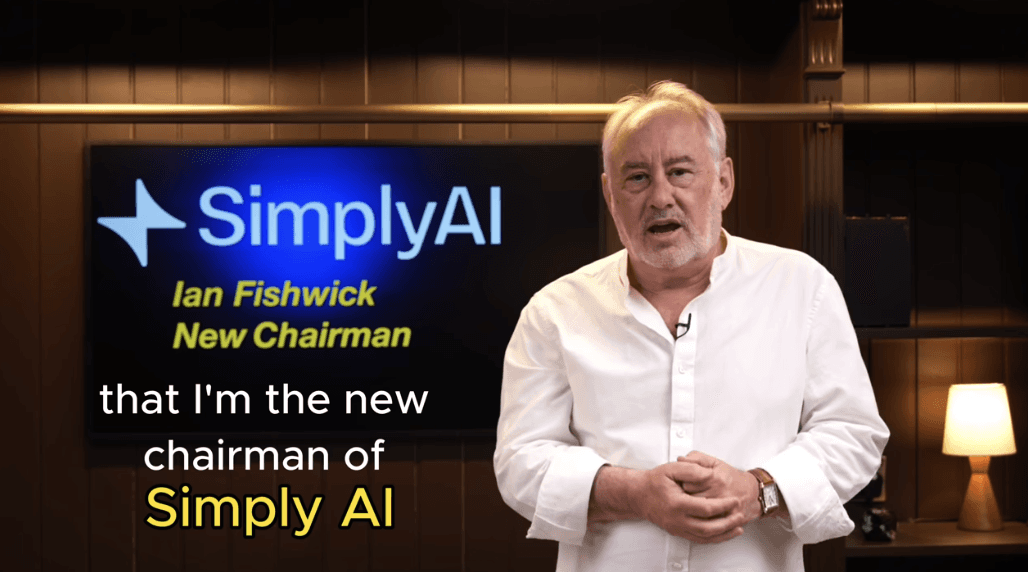
Through approaches such as Agent-to-Extension (A2E) integration, platforms like SimplyAI enable AI receptionists answering inbound calls, AI assistants supporting in-call workflows, automatic structured data capture during conversations, real-time call summaries and follow-up actions, and hybrid AI-human call handling inside existing routing logic.
This is the moment telecom changes category. Voice AI stops being a bolt-on application and becomes part of the switching fabric of the business.
Capability Gap Is Now a Churn Driver
SMB telecom churn has historically been driven by price and service experience. A third factor is now emerging: capability gap. When a customer moves because a competitor offers Voice AI and their incumbent does not, they rarely return. The provider is no longer perceived as modern infrastructure. They are perceived as legacy. That perception is commercially expensive and difficult to reverse. It reframes every renewal conversation and every upsell pitch from a position of weakness.
Retention and Margin Expansion Are Both in Play
Operators treating Voice AI as a core portfolio layer are seeing two immediate effects. Customers using AI-driven call handling become embedded in workflow automation and churn later. At the same time, Voice AI introduces software-style gross margins on top of connectivity revenues that have been under pressure for over a decade.
The ARPU lift is comparable to what operators saw when moving customers from PSTN to hosted voice. The difference is that this time the demand is coming from customers themselves, rather than requiring an education cycle.
Telecom Is Entering Its AI Transition Moment
Telecom is going through the same shift cloud computing triggered a decade ago, but faster. Voice AI is becoming the new application layer of communications infrastructure, and the providers best positioned to win are not the hyperscalers. They are the resellers who already own the voice relationship: the phone numbers, the SIP trunks, the hosted PBX platform and the customer trust. If they move first, they win first.
The Window Is Open, but It Will Not Stay Open for Long
First-mover advantage in telecom channel distribution compounds quietly but powerfully. The distributor enabling their partners with a working Voice AI proposition today will win accounts that would otherwise have been competitive next year. The operator giving their SMB base an AI answer now will see structurally different retention metrics twelve months out.
Voice AI is a primary buying decision. The resellers who move early, especially those embedding AI directly into the PBX dial plan rather than layering it on top, are the ones most likely to still be growing their base in three years. Everyone else will be defending it.
Want to partner with us?
Contact: Commercial@simply-ai.io