·
3 minutes
Build, Buy, or Partner: The Real Numbers Behind Voice AI for Comms Service Providers and MSPs bringing Voice AI to market.
James Bolger

99% of the world's bread-eating population buys bread rather than baking it themselves. The equipment is expensive, the skill takes considerable time to develop, consistency is difficult to maintain, and the end product is almost always better when made by someone who specialises in baking bread, all day, every day. The same logic applies when telecoms resellers, MSPs, and distributors face the question of how to bring voice AI into their portfolio.
The build, buy, or partner debate has never been more pressing. AI models are evolving on a quarterly cycle. The solution you build today may need gutting within eighteen months. The question worth asking is less "can we build this?" and more "should we, and at what ongoing cost?"
Some things you should build
Building makes sense when the capability is your core differentiator. Proprietary billing engines, bespoke network orchestration layers, customer portals that define your brand experience: these are worth the investment because they are the business. Total control over the roadmap, no dependency on third-party pricing changes, no vendor lock-in. For a handful of genuinely strategic capabilities, that control earns its price tag.
The decision to build must be driven by strategic value, not the availability of idle engineering resource. This is where the sunk cost fallacy does its damage, and it is one of the most expensive mistakes in the channel. A CTO with five developers between projects does not have a good reason to build a voice AI platform; they have idle capacity. The logic of "we have the developers on payroll already, so the build is essentially free" is seductive and in my opinion, wrong. Those developers carry salaries, benefits, management overhead, and opportunity cost. Every sprint they spend replicating a specialist capability is a sprint they are not spending on the thing that actually drives revenue.
Some things you should buy off the shelf
For commoditised functions like CRM, ERP, or standard helpdesk tooling, buying a licensed product is almost always the right call. Someone else has solved the problem at scale, amortised the R&D across thousands of customers, and will keep the product current without you lifting a finger. The trade-off is flexibility. You get what the vendor built, configured the way the vendor allows. If your requirements sit within the product's boundaries, buying is efficient. If they do not, you end up fighting someone else's architecture, which is often worse than starting from scratch.
Voice AI is a different beast entirely
Voice AI sits in neither camp. In many cases, particularly where integrated Comms is concerned, it is too specialised to buy off the shelf and too complex to build responsibly in-house. This is deep, evolving technology that touches natural language understanding, real-time telephony infrastructure, compliance, and model orchestration all at once. Treating it like a standard software project fundamentally underestimates what is involved.
At a conference I attended recently, a panellist told a story that makes this argument better than any framework I can share with you. A customer of his had been spending north of £100,000 a year on a specialist AI platform in their given field. They wanted to halve that spend with the vendor in question. The new plan: bring it in-house and task five developers with replicating it.
He walked them through the reality. Five developers each at market rate, fully loaded with employer NICs, pensions, benefits, and management overhead, puts you somewhere between £400,000 and £500,000 a year in labour costs alone. That is four to five times the external spend they were trying to reduce. Moreso, the labour cost is just the starting point as far as building an in-house solution is concerned. Infrastructure, testing environments, audits, and ongoing maintenance all sit on top of this.
Then comes the part that kills most internal builds: keeping pace. AI models shift on a near-quarterly cycle and the model you integrate today will be superseded, which is a given. Between patching, updating, retraining, re-integrating, this work never truly “finishes”. Those five developers are no longer building something and moving on. They are now a standing team, maintaining a platform that sits outside your core business, indefinitely.
A specialist platform absorbs all of this. The R&D burden, the cost of staying current with the latest models, security patches, compliance requirements. That cost gets spread across an entire customer base, which means you get continuous innovation at a fraction of the internal price tag. You stay focused on what earns you money: serving your customers, growing your base, and ultimately selling your core proposition.
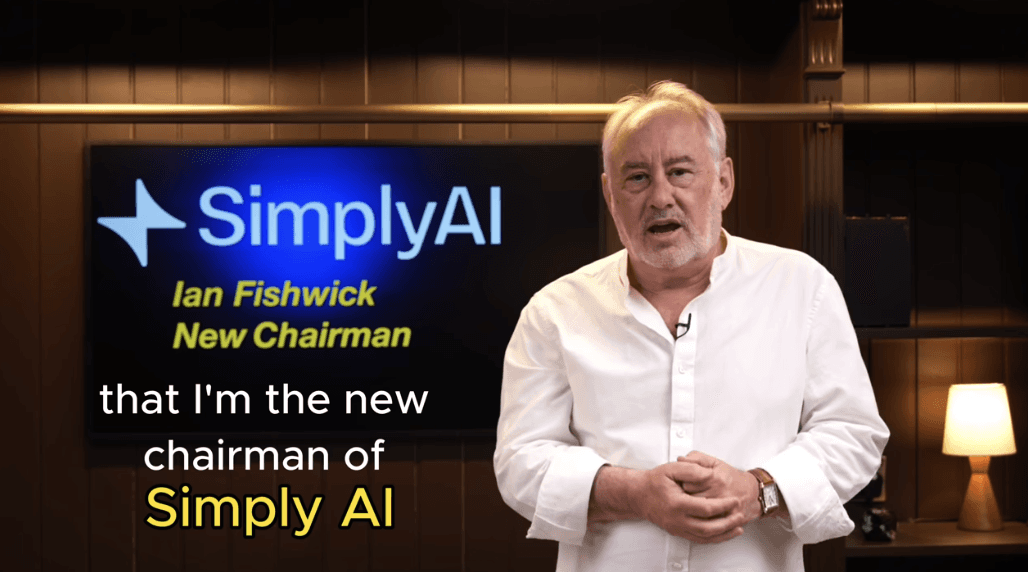
A channel-native vendor like SimplyAI lets you go live in weeks, not quarters. If customer demands shift, if a better approach emerges, you can adapt without writing off months of development. Compare that to the internal build, where pivoting means breaking the bad news to the board that last year's £500,000 platform needs scrapping.
The baker and the bread
You could buy the flour, the yeast, the proving baskets, and the oven. You could train your team to bake. You might even produce a decent loaf. But the bakery has been doing this for years, bakes a thousand loaves a day, and sells you a better product for less than your ingredients would cost.
Build the things that define you and move the needle for your business. Buy the tools and solutions that help you get to where you need to be. And for specialist, fast-moving technology like Voice AI, find a partner who has already spent the years and considerable capital getting it right, so you can focus on the thing only you can do.
Want to find out more? Book a call here.